
How to Use a Whetstone: Step-by-Step Sharpening Guide
A whetstone (also called a sharpening stone or waterstone) is a rectangular block used to sharpen and maintain knife edges. You soak it in water, hold your knife at a specific angle, and draw the blade across the stone's surface to grind away dull metal and create a new sharp edge.
Whetstone sharpening takes practice, but it's not complicated. The process boils down to: soak the stone, find your angle, make consistent passes, check for a burr, then flip and repeat. In 10-15 minutes, you can bring a dull knife back to razor-sharp.
This guide covers everything you need to know, from setup to finishing techniques.
What You Need
You'll need a dual-sided whetstone with 1000 and 6000 grit. This covers most sharpening needs. Tap water works fine for soaking. Grab a container to soak the stone in (a baking dish works), a towel to place under the stone and dry the knife, and any kitchen knife that needs sharpening.
Optional: a damp cloth under the stone keeps it from sliding around.
Understanding Whetstone Grit
Grit refers to how coarse or fine the stone's surface is. Higher numbers = finer grit = smoother finish.
Grit Breakdown
Coarse (200-800 grit) repairs chips or fixes very dull knives. Medium (1000-3000 grit) handles regular sharpening when your knife feels dull. Fine (3000-6000 grit) polishes the edge and removes scratches. Ultra-fine (6000-8000+ grit) creates mirror finishes, but that's mostly optional.
What Beginners Need
A 1000/6000 combination stone handles 95% of kitchen knife sharpening. Start with 1000 grit to sharpen, finish with 6000 grit to polish. You don't need coarser stones unless your knife is damaged.
The Yuzu dual-sided whetstone uses this 1000/6000 setup, making it a good all-around choice for home use.
How to Use a Whetstone: Step-by-Step
Step 1: Soak the Stone
Place your whetstone in a container of water and let it soak for 15-30 minutes. You'll see air bubbles rising from the stone. When the bubbles stop, the stone is fully saturated and ready to use.
Some synthetic stones don't need soaking and just require a splash of water. Check your stone's instructions, but traditional Japanese waterstones almost always need a proper soak.
Step 2: Set Up Your Workspace
Place a damp towel on your counter to prevent slipping. Put the whetstone on top with the coarse side (1000 grit) facing up. Position the stone so the long edge runs perpendicular to you.
Keep a small cup of water nearby. You'll need to wet the stone periodically as you sharpen.
Step 3: Find Your Angle
This is the most important part. Japanese knives like Yuzu's gyuto and nakiri sharpen at 15 degrees per side. Western knives typically use 20 degrees.
To find 15 degrees by feel: Place the knife flat on the stone. Lift the spine (back of the blade) until it's about the height of two stacked coins. That's approximately 15 degrees.
Once you find your angle, maintain it throughout the sharpening process. Inconsistent angles won't create a proper edge. Our sharpening angle guide covers angles for every knife type and how to check yours.
Step 4: Sharpen the First Side
Hold the knife with your dominant hand on the handle. Place your other hand's fingers on top of the blade near the edge (not on the sharp part, closer to the spine).
Position the knife at a 45-degree angle across the stone, with the blade edge trailing behind as you push forward. Push the blade away from you across the stone, starting at the heel (near the handle) and sliding toward the tip. Apply moderate, consistent pressure.
Use the full length of the stone. Pull the blade back toward you with lighter pressure, then repeat. Make 10-15 passes on this side.
Add water to the stone as needed. A gray slurry will form - this is normal and actually helps with sharpening.
Step 5: Check for a Burr
After 10-15 passes, gently run your finger perpendicular across the edge on the side you haven't sharpened yet (the side facing up). You're checking the opposite side from where you've been grinding.
You should feel a slight rough edge or burr - a thin curl of metal that's been pushed over from your sharpening. It feels like a tiny wire running along the entire length of the blade.
If you don't feel a burr along the whole edge, keep sharpening that side until you do. The burr confirms you've sharpened all the way to the edge.
Step 6: Sharpen the Other Side
Flip the knife over (keep the handle in your dominant hand - you're not switching hands). Sharpen this side the same way, making 10-15 passes at the same angle.
You'll feel the burr flip to the other side. Once you feel it along the whole edge, you've created a new sharp edge on both sides.
Step 7: Refine with Finer Grit
Flip your whetstone to the finer side (6000 grit if using a dual-sided stone). Repeat the sharpening process - 10-15 passes per side, same angle, same technique.
The finer grit removes scratches left by the coarser stone and polishes the edge. You should still feel a small burr form and flip.
Step 8: Remove the Burr
After finishing on the fine grit, make a few very light passes, alternating sides after each stroke. This removes the burr and leaves a clean edge.
Test the knife by slicing paper or trying to shave arm hair. A properly sharpened knife should cut paper cleanly with minimal pressure.
Common Whetstone Sharpening Mistakes
Inconsistent Angle
The biggest mistake beginners make. If your angle changes with each stroke, you're rounding over the edge instead of sharpening it. Lock in your angle and maintain it throughout.
Some people use a sharpie to color the bevel before sharpening. If the marker comes off evenly, your angle is consistent.
Not Sharpening Long Enough
You need to sharpen until you feel that burr along the entire edge. With a very dull knife, this might take 30-40 passes per side on the coarse stone. Be patient.
Too Much Pressure
You don't need to push hard. Moderate, consistent pressure works better than heavy grinding. Let the stone do the work.
Dry Stone
Keep the stone wet throughout sharpening. A dry stone will glaze over and stop cutting effectively. Add water whenever the surface looks dry.
Skipping the Fine Grit
The 1000 grit side creates a functional edge, but it leaves scratches. The fine grit (6000) polishes those out, making the edge smoother and more durable.
How Often Should You Sharpen?
For home cooks using their knives daily: full sharpening session with a whetstone every 2-3 months, light touch-ups with a honing rod weekly between sharpenings.
Professional kitchens might sharpen weekly or even daily depending on volume. You'll know it's time when the knife starts requiring more pressure to cut or begins tearing rather than slicing cleanly.
Japanese knives with harder steel (like Yuzu's AUS-10 knives at 58-60 HRC) hold their edges longer than softer Western knives, often going 3-4 months between sharpenings with regular use.
Whetstone Care and Maintenance
Cleaning After Use
Rinse the whetstone under running water to remove the metal slurry. Scrub lightly with your fingers or a soft brush. Don't use soap - it can clog the stone's pores.
Let the stone air dry completely before storing. This can take 24-48 hours depending on humidity. Store it somewhere with good airflow, not in a sealed container while wet.
Flattening Your Stone
Over time, whetstones develop a dip in the middle from repeated use. This makes it hard to maintain a consistent angle. Every few months (or when you notice the dip), flatten your stone using a flattening stone or 220-grit sandpaper on a flat surface.
Wet the stone, rub it in figure-eight patterns on the flattening surface until it's level again. Check by looking across the stone's surface at eye level - it should be flat, not dished.
Whetstones vs Other Sharpening Methods
Whetstones vs Pull-Through Sharpeners
Pull-through sharpeners are fast but remove a lot of metal and can damage your blade over time. They're also set at a fixed angle that might not match your knife.
Whetstones take longer but give you complete control over the angle and remove only what's necessary. For quality knives, whetstones are the better choice.
Whetstones vs Electric Sharpeners
Electric sharpeners work quickly and don't require skill, but they're aggressive and can shorten your knife's lifespan. They're also expensive and take up counter space.
A whetstone costs £30-40 and lasts years. The skill curve is real but not steep. If you want a more detailed walkthrough, our beginner's sharpening guide goes step by step with common mistakes to avoid.
Whetstones vs Honing Rods
Honing rods don't sharpen - they realign the edge between sharpenings. Think of sharpening as creating a new edge, honing as maintaining it.
Use a honing rod regularly (weekly) and a whetstone periodically (every few months). They complement each other.
Is Whetstone Sharpening Worth Learning?
If you own quality knives, yes. Whetstones give you complete control over your edge and remove minimal metal compared to aggressive sharpeners.
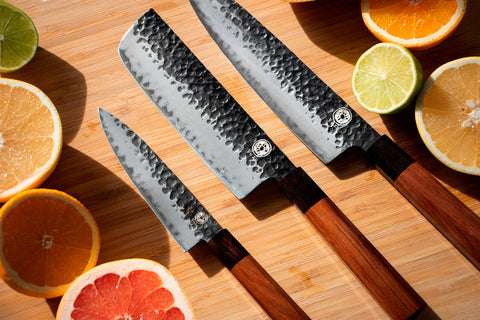
The first few times will feel awkward. Your angle will wobble. You'll wonder if you're doing it right. By your third or fourth knife, muscle memory kicks in. Within a month, you'll sharpen a gyuto, nakiri, and petty knife in under 20 minutes total.
The alternative is paying someone £5-10 per knife every few months, or using cheap sharpening gadgets that slowly ruin your blades. For the price of 3-4 professional sharpenings, you can buy a good whetstone and sharpen your knives yourself forever.
Plus, there's something satisfying about slicing a tomato with a blade you just sharpened yourself.