
The Higonokami: Japan's Classic Pocket Knife
The Higonokami is Japan's most famous pocket knife. It's a minimalist friction folder that's been carried by farmers, craftsmen, and everyday people since 1896. Distinctive brass handle, exposed blade lever, no-frills design—this is Japanese knife-making stripped to its essentials. Built to work, not to show off.
What is a Higonokami knife?
A Higonokami is a traditional Japanese folding pocket knife that uses friction rather than a locking mechanism to keep the blade open. Simple folded brass handle stamped with the maker's mark. Carbon steel blade that pivots on a single pin. A metal lever called a chikiri extends from the spine and acts as both a blade stop and thumb rest that adds friction when you're cutting.
The design is brutally simple. No springs, no locks, no fancy mechanisms. You open it by pulling the blade out through a small groove with your fingernail. Close it by pushing the blade back into the handle. The friction between the blade tang and handle keeps it from folding on your fingers while you work.
The history behind the Higonokami
The Higonokami first appeared in 1896 in Miki City, Hyogo Prefecture, an area known for metalworking. The timing wasn't accidental. Following the Meiji Restoration in 1868, Japan underwent massive social reforms. The samurai class was abolished, carrying swords became illegal, and thousands of swordsmiths suddenly needed new work.
Many turned their skills to making everyday tools and knives. The Higonokami came from this transition—a practical folding knife for farmers, tradespeople, anyone who needed a reliable cutting tool they could slip in a pocket. The name translates roughly to "Lord of Higo," referencing an old Japanese province, though the knives weren't actually made there.
By the early 20th century, hundreds of small workshops in Miki were producing variations. Today only one manufacturer has the legal right to stamp "Higonokami" on the blade: Nagao Kanekoma, a fifth-generation knife-making family. The name is trademarked by the Miki Custom Knife Guild, making Nagao Kanekoma the sole authentic producer.
Design features that make it unique
Friction folding mechanism
Unlike modern pocket knives with lock-back mechanisms or liner locks, the Higonokami relies entirely on friction. The blade pivot is tight enough to hold the knife open under normal cutting pressure, but you can still close it with deliberate force. You need to be conscious of your grip. Don't use it for heavy prying or twisting motions that could cause the blade to fold.
The chikiri lever has a dual purpose. When the blade is open, you can rest your thumb on it to add downward pressure, increasing friction and making the knife safer. When closed, the lever sticks out from the handle, giving you something to grip when opening the blade.
Brass handle construction
The handle is stamped from a single piece of folded brass. Thin, lightweight, develops a beautiful patina over time. You'll see the maker's mark and steel type stamped directly into the brass. No logos, no graphics, just functional information. The brass tarnishes with use, picks up fingerprints, takes on character. Some people polish theirs to keep it shiny. Others let it age naturally.
Carbon steel blade
Traditional Higonokami knives use Japanese carbon steel, typically Aogami (Blue Paper Steel) or Shirogami (White Paper Steel). Carbon steel gets extremely sharp and holds an edge well, but it rusts if you don't take care of it. You'll notice a patina developing after a few uses—this is normal and actually helps protect against deeper corrosion.
Some modern versions use stainless steel variants like VG-10 for people who want lower maintenance. Purists stick with carbon steel for the superior edge and the ritual of caring for the blade.
What can you use a Higonokami for?
The Higonokami isn't a heavy-duty work knife. It excels at light everyday tasks:
- Opening packages and boxes – The sharp blade cuts through tape and cardboard cleanly
- Food prep while camping or hiking – Slice cheese, salami, fruit, vegetables
- Whittling and craft projects – The thin blade gives you excellent control for detail work
- Cutting rope, twine, or fishing line – Good for outdoor activities
- Sharpening pencils – A classic use case that shows off the blade's precision
The lightweight design makes it good for everyday carry. Slips into a pocket without adding bulk, and the brass handle is smooth enough that it won't snag on fabric. Just know that since it lacks a pocket clip, it can shift around in your pocket. Some people add a small leather sheath or wrap a rubber band around it to keep it secure.
Why the Higonokami remains popular
In a world of over-engineered pocket knives with assisted opening, ball-bearing pivots, and titanium scales, the Higonokami is refreshingly simple. There's an honesty to the design—you can see exactly how it works just by looking at it. No hidden parts, no proprietary mechanisms, no planned obsolescence.
For collectors and EDC enthusiasts, the appeal is partly historical. You're carrying a design that's barely changed in over 120 years, made using traditional techniques by one of Japan's last remaining friction folder workshops. A piece of knife-making history that still functions perfectly for modern tasks.
There's also something meditative about caring for a carbon steel blade. Wiping it down after use, watching the patina develop, occasionally oiling the pivot. These small rituals connect you to the tool in a way that stainless steel folders don't. The knife becomes uniquely yours as it ages and takes on the marks of how you use it.
How to care for your Higonokami
Carbon steel requires more attention than stainless, but the maintenance is straightforward:
- Keep it dry – Wipe the blade clean after each use, especially if you've cut anything acidic or wet
- Apply a light coat of oil – Use mineral oil, camellia oil, or a knife-specific lubricant when storing for extended periods
- Don't fight the patina – The blade will develop a dark gray or brown patina over time; this is protective and normal
- Remove rust spots immediately – If you see orange rust forming, clean it off with fine steel wool or a rust eraser
- Sharpen regularly – Carbon steel is easy to sharpen on a whetstone; maintain the factory bevel angle
The pivot will loosen slightly over time with use. If the blade becomes too loose and feels unsafe, tighten it by gently tapping the rivet with a hammer while supporting the knife on a hard surface. If it's too stiff, loosen it by prying the handle plates apart slightly near the pivot.
Choosing the right Higonokami size
Higonokami knives come in several sizes, typically measured by blade length:
- 50mm (2 inches) – Small and lightweight, good for fine detail work
- 70mm (2.75 inches) – The most popular size, balanced for general use
- 90mm (3.5 inches) – Larger blade for more cutting power, still pocketable
- 100mm+ (4+ inches) – Less common, for those who want a bigger friction folder
The Yuzu Higonokami offers good value for anyone looking to add this classic design to their EDC rotation. You get traditional Japanese craftsmanship with practical everyday functionality—a pocket knife that works as well today as it did over a century ago.
Is the Higonokami right for you?
The Higonokami isn't for everyone. If you need a knife that locks securely for hard use, get a modern folder. If you want something maintenance-free, a stainless steel blade makes more sense. But if you appreciate minimalist design, enjoy the ritual of caring for your tools, and want a pocket knife with genuine historical significance, the Higonokami delivers.
This is a knife that teaches you to pay attention. How you grip it, how you cut with it, how you care for it. In return, you get a cutting tool that will last decades and improve with age. The brass handle develops a patina unique to how you carry it. The carbon steel blade sharpens to an edge that puts most modern steels to shame.
More than 120 years after its creation, the Higonokami remains relevant because it does exactly what it's supposed to do: fold up small, cut cleanly, and last a lifetime. That's not nostalgia. That's good design.
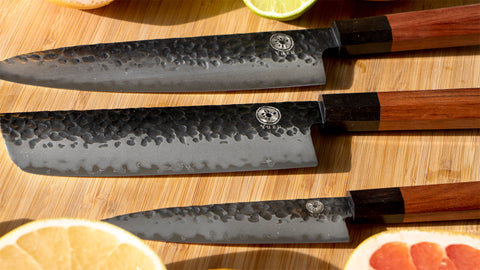
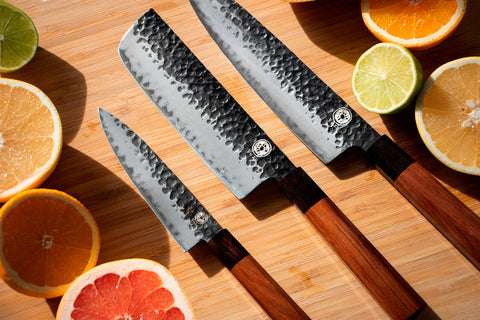
If you're building a knife collection or just want a reliable everyday carry blade, the Yuzu Higonokami is a good starting point. For those looking to expand into Japanese kitchen knives, the gyuto is the go-to all-rounder, while the nakiri handles vegetable prep and the petty knife covers precision tasks. Our guide to Japanese chef knives covers what makes these blades different from their Western counterparts.