
Carbon Steel Kitchen Knives: Benefits, Care & Best Choices
Carbon steel kitchen knives are made from an iron-carbon alloy (typically around 2% carbon content). Unlike stainless steel, carbon steel lacks the chromium that prevents rust. This means more maintenance, but you get better sharpness and edge retention in return.
Walk into a professional kitchen and you'll see carbon steel knives everywhere. They're sharper out of the box, easier to sharpen when they dull, and develop a unique patina over time that tells the story of your cooking. But they also rust if you leave them wet.
This guide explains what makes carbon steel different, whether the extra care is worth it, and how to keep these knives in top condition.
What Makes Carbon Steel Different?
The key difference comes down to chemistry. Carbon steel contains iron and roughly 2% carbon. Stainless steel adds 12-18% chromium, which forms a protective layer that prevents rust.
That chromium comes with a tradeoff. It makes the steel harder to sharpen and slightly softer, meaning stainless knives don't hold an edge quite as long. Carbon steel, without that chromium barrier, gets sharper and stays sharp longer.
The Hardness Factor
Carbon steel knives typically rate 58-65 on the Rockwell hardness scale (HRC). Yuzu's AUS-10 high-carbon stainless steel rates 58-60 HRC. That's the sweet spot where the blade is hard enough to hold an edge but not so hard it chips easily.
Traditional carbon steel can go harder (63-65 HRC). Better edge retention, but the blade becomes brittle. A 58-60 HRC blade is more forgiving during normal kitchen use.
Benefits of Carbon Steel Kitchen Knives
Superior Sharpness
Carbon steel gets sharper than stainless. The fine grain structure lets you hone a finer edge. Professional chefs who need paper-thin vegetable slices or clean fish cuts prefer carbon steel for this reason.
The edge also lasts longer between sharpenings. A well-maintained carbon steel knife might go 2-3 months of daily use before needing the whetstone, while stainless might need attention monthly.
Easier to Sharpen
When your carbon steel knife does dull, you'll spend less time bringing it back. The steel responds quickly to whetstones. What takes 20 minutes with stainless might take 10 with carbon.
For home cooks who enjoy sharpening their own knives, this is a real benefit. Less grinding, less metal removed, faster results.
Patina Development
Patina is the bluish-gray layer that forms when carbon steel reacts with food acids and air. It starts golden yellow, turns blue, then purple, then settles into a gray that darkens over time.
This isn't damage. It's a protective layer that slows further oxidation. And it makes your knife unique. No two patinas look the same. The foods you cut, how you use the knife, even your local water quality all affect how it develops.
Some knife enthusiasts love this. Others prefer the consistent look of stainless. There's no right answer, but patina is permanent once it forms.
Cost
For comparable quality, carbon steel knives often cost 15-30% less than stainless. The materials are simpler to work with, and traditional Japanese knife makers have centuries of experience with carbon steel.
Drawbacks of Carbon Steel
Rust Risk
Leave a carbon steel knife wet for an hour and you'll likely see rust spots. Leave it overnight and you might have permanent pitting. The lack of chromium means the iron oxidizes quickly in the presence of water.
Patina helps, but it's not foolproof. You still need to dry your knife immediately after washing.
Reactivity with Acidic Foods
Before patina develops, carbon steel reacts with acidic ingredients like tomatoes, citrus, and onions. This leaves a metallic taste on the food and discolors the blade.
Once you've built up a patina, the problem mostly goes away. But in the first few weeks, you'll notice it.
More Maintenance
Carbon steel demands attention. You need to:
- Dry it immediately after washing
- Oil it if storing for more than a few days
- Never put it in the dishwasher
- Store it somewhere dry (a wooden saya helps)
If you forget to dry your knife once, you'll probably remember after seeing the rust spots.
Carbon Steel vs Stainless Steel: Which Should You Choose?
Choose carbon steel if you:
- Want the sharpest possible edge
- Enjoy hands-on knife maintenance
- Like the idea of a knife that develops character over time
- Cook in a relatively dry kitchen
- Don't mind drying your knife immediately after use
Choose stainless (or high-carbon stainless) if you:
- Want low-maintenance performance
- Work in a humid environment
- Prefer a knife that looks the same in 5 years
- Sometimes forget to dry your knives right away
- Value corrosion resistance over maximum sharpness
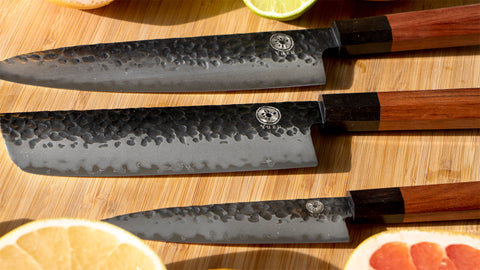
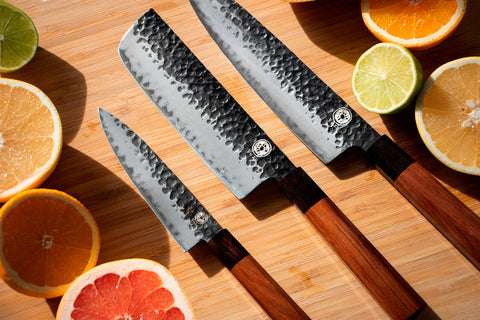
Or consider a middle ground: high-carbon stainless steel like AUS-10. This adds enough carbon for good hardness and edge retention (58-60 HRC) while including chromium for rust resistance. Yuzu's gyuto and nakiri use AUS-10 with san-mai construction, giving you sharp, durable blades that don't demand constant attention.
How to Care for Carbon Steel Knives
Daily Maintenance
Wash your carbon steel knife by hand with dish soap and warm water. Dry it completely with a towel immediately after washing. Don't let it air dry.
If you've been cutting acidic foods, rinse and dry the blade as soon as you're done. This prevents discoloration and protects the developing patina.
Building Patina
A new carbon steel knife will be shiny and silver. Within days of use, it'll start developing patina. You can accelerate this by:
- Cutting acidic vegetables (onions work well)
- Wiping the blade with lemon juice, then drying immediately
- Using the knife regularly rather than storing it unused
Once you have a good patina layer, the knife becomes more resistant to rust and reactivity. Think of it as seasoning, like a cast iron pan.
Long-Term Storage
If you're not using your carbon steel knife for a week or more, apply a thin coat of food-safe mineral oil to the blade. Wipe off any excess. This creates a barrier against moisture in the air.
Store the knife in a dry place. A wooden knife block or magnetic strip works well. Better yet, use a wooden saya (knife sheath) which protects the edge and keeps moisture away from the blade.
Dealing with Rust
Surface rust (orange-brown and rough) needs to come off. Light rust can be removed with:
- Bar Keeper's Friend or a rust eraser
- Fine-grit sandpaper (1000-2000 grit)
- Baking soda paste, scrubbed gently
After removing rust, dry the knife thoroughly and build up the patina again. Deep rust that's pitted the steel is harder to fix and might require professional help.
Sharpening
Carbon steel responds well to whetstones. Start with a 1000-grit stone for general sharpening, finish with 3000-6000 grit for a polished edge. The same 15-degree angle used on Japanese knives works well.
You'll notice carbon steel sharpens faster than stainless. Don't over-do it. A few passes per side is often enough.
What About High-Carbon Stainless Steel?
High-carbon stainless steel splits the difference. It contains more carbon than regular stainless (hence "high-carbon") but includes enough chromium to resist rust.
AUS-10, the steel used in all Yuzu knives, is a good example. Our guide to Japanese knife steel covers the broader landscape, and our AUS-10 vs VG-10 comparison breaks down how the two most popular stainless options differ. It rates 58-60 HRC (harder than most Western stainless, softer than extreme carbon steels), holds an edge well, and doesn't rust under normal kitchen conditions.
You get most of the sharpness benefits without the constant maintenance. The tradeoff is slightly less ultimate sharpness and edge retention compared to pure carbon. But for most home cooks and even professional chefs, high-carbon stainless hits the practical sweet spot.
Is Carbon Steel Right for You?
If you're comfortable with the care requirements, carbon steel knives offer real performance benefits. Sharper edge, longer edge retention, easier sharpening. Plus the patina adds character.
But they're not forgiving. Forget to dry one and you'll see rust. Leave it soaking while you eat dinner and you'll have stains. For busy kitchens or forgetful cooks, the maintenance becomes a burden instead of a ritual.
High-carbon stainless steel bridges that gap. You still get hardness, sharpness, and good edge retention, but you can relax a bit on the immediate drying. You won't develop patina, but you also won't wake up to a rusty knife.
The best knife is the one you'll actually use and maintain. If you love the idea of carbon steel and will commit to the care, you'll be rewarded with exceptional cutting performance. If that sounds like too much work, there's no shame in choosing a high-quality high-carbon stainless option like Yuzu's AUS-10 knives. You'll still get a blade that outperforms most Western stainless steel at a fraction of the price.